Showing posts with label IAR 222 - Point. Show all posts

Friday, December 10, 2010

point : explorations

The main themes in the Unit – Explorations, are Growth, Simplicity, and Where Do We Go From Here? Architecture is changing because machine and man are working together, and innovation can be seen in different ways. Design is influenced on many levels through the study of new materials and how they come together, as well as the study of movement through the invention of the automobile and the elevator. All these changes are happening so fast it makes me wonder, what is the dominating story?

New York and Chicago are two major cities where growth can be seen in their impressive skylines. Machines, steel, and concrete were the main parts of the thread that helped create skyscrapers. We can see three important moments in these buildings, how they touch the ground, how they hit the sky, and what happened in the middle. I appreciate the attention that was given to these moments considering it must have been a challenge to incorporate good design in such a massive structure. Designers went back in time to help with this challenge. We can see it in the Gothic style of the Trinity Church in New York, and the Renaissance style in the wavy exterior on the Reliance Building in Chicago. Looking back is always important, but the industrial revolution was about looking forward and created positive economic changes that were so desperately needed.

Art Nouveau continued this trend of only moving forward. The ever-moving line seen in curved steel and geometric flowing wall coverings, invited people to stop and appreciate the design as they passed by. Geometry creates form and our professor said, “Form itself is what we appreciate.” We are mesmerized by the trippy architecture and this brings enjoyment to the people. Building on this, we move to the glamorous Art Deco period that is really all about enjoyment for the people. This is the time when the movies start, and movement and optical illusion are their main focus. Both of these styles are embraced for a short time but then we move toward simplicity.

Charles and Ray Eames lead the way with their furniture designs and famous case study house called, Eames House. All the parts of the structure were manufactured off site, then transported, and finally, simply put together like a puzzle. The design had to be well thought out since it needed to come together seamlessly on site. This must have been a challenge to avoid any errors on the day of installation. Their use of bold colors and textiles made this home have a different feeling than some of the other modern buildings that were being criticized for feeling cold. They seem to have been a popular design team because unlike other modern designers, they were not just designing for themselves, but for others as well. Interior design started soon after because very few architects were listening to what people wanted for their interior spaces.

The intentions of interior designers are good, but over decorating interior spaces have created a quick fix to the problem. We now transport stuff from all over the world without consideration of the impact this has on the earth. This also promotes surface verses substance. Who has better stuff in their homes instead of thinking about the community and what could make it better. Everyone likes to look at nice things at home or work, but at what expense? Designers need to be the leaders in promoting awareness of what will be left behind. The first unit we studied this semester was about spirituality, religion, power, and measuring the stars. In my first unit summary I wrote, Architecture shows us about our values, successes and failures, aspirations, physical and social needs, cross-cultural insights, attitudes towards nature, and techniques available at a certain time in history. It is important though to remember the way Vitruvius saw it, stay balanced and keep it simple. I picked the image below because the last thing our class discussed was coming FULL CIRCLE in how we design. This term is important to me and that is why my blog is called Full Circle. I want to constantly look back, look forward, and always keep moving in a positive direction.
https://blogger.googleusercontent.com/img/b/R29vZ2xl/AVvXsEjrxXB8Tz0cHKbG8C_jc7RsKfHtNrdhbTwGxhJVEcLMd99L2VTpt8A71Mvb-uEgGIlUTpdwLk3svFJ-B4jkwtMF0YSzKU1vr0WcWG7pBOe1RZMLvPWfVeZXq5TnqRxMvBp9qc7ja94H0n3c/s320/Full+circle.jpg

Monday, November 8, 2010

point : reflections

The main theme in the Unit – Reflections, is the Process Of Change. We observe the design principles being pushed outside the box and since there are many voices planning what will come next, moving forward is the only way to stop the talk and see the change realized. By incorporating Roman, Greek, and Gothic revivals into architecture, scale and new materials produce amazing structures that change society. Commerce begins to be the new religion and the goods brought from the East introduce a worldliness that Europe and America enjoy.

It is hard for people to make a change before reflecting on why they want the change in the first place. It is really important for designers to look back to the foundations of architecture and the alternatives already tried, and then, start thinking and talking about what comes next. It is very interesting that at the same time in history that all the revival styles were spinning around, the mirror was invented and we could stop, focus, and reflect. Looking back at our selves to find what needed to be corrected was probably just as significant as looking to the architecture for the answers.

As industrial and political revolutions were flipping the world on its head, England and America were changing design at every level. Furniture was rejecting curves and more simple straight lines were brought back. Practical things such as wheels were put on tables for mobility. Thomas Jefferson brings the Roman revival back from France and columns and domes are seen in the new government buildings in Virginia and Washington, DC. As the country moves south and west the Greek revival is seen in the government buildings in North Carolina and Tennessee. The scale of these buildings relate strongly to Roman and Greek architecture, and when size and new materials such as glass and iron are introduced in the 19th century, Gothic revival is also apparent. Gallerias, Libraries, and exhibition halls allowed for massive open spaces for expanding the minds and level of enjoyment of the people.

Change is usually good. The industrial revolution is the bridge that connects the world and leads Europe and America towards a modern society. People are reading about other cultures and buying exports from the East, which allows their way of thinking to change. Designers involve themselves in this movement by creating beautiful art, artifacts, interiors, clothes, and architecture that incorporate nature and simplicity learned from the East.


I chose the image above because there isn't anything more appropriate than a cartwheel to explain the unit on Reflections and Revolution. I will never forget the demonstration in class! The 1st part of the cartwheel is moving outside the box. The 2nd part is stretching somewhere. The 3rd part is hands on the ground - suspending the world. And the 4th part is coming right side up and rewriting the rules.

Monday, October 25, 2010

point : alternatives

The main theme in Unit 3 – Alternatives, is to Know the Rules before you Break the Rules. We are taught at a very young age to follow rules no matter if we agree with them or not. The people who help guide our lives do this to keep us on the right path until we can make good decisions for ourselves. If we did not have this instruction and direction unnecessary mistakes are made and our potential would not be realized. The same thing is true in design. The foundations of architecture have taught us where design started and how important it is to learn from designers before us so that when alternatives are introduced there is a greater chance for success.

Since Egypt, geometry has guided us and will continue to be a repeating theme as the rules are applied and then broken. The complexity of the geometric matrix used in the design of the Amiens Cathedral in France is interesting to me because it moves us from mathematics to illusions. Keeping within the rules of geometry, Gothic details are added and become the dominant focus. This concept is important because the church represents the whole universe; both logic and spirituality are represented in this monumental building. The Cathedral at Florence is an example of another church that also reaches vertically toward heaven. Through the grouping of columns they become stronger and make it possible for them to reach higher. The light that came into the space at the top of the highest point was intentional, dramatic, and resembled The Divine.

Geometry continues to be present in the Villa Rotunda and the Villa Barbaro designed by Palladio. Circles, squares, proportion, and rhythm are simple to understand and are repeated in these buildings. Villas were all about the control of the designer. Palladio wanted to tell the people what to feel, where to look, and where to walk. He wants them to feel relaxed, entertained, and worldly. He wants them to see the landscape from specific locations, and have a definite direction in which they enter and leave the villas. This control makes Palladio the Man who is the Measurer of all Things.

Michael Angelo continued to use geometry during the Renaissance but added to it with his own ideas of testing limits. Bringing new shapes such as ovals and trapezoids allowed his architecture to have embracing entrance spaces. I appreciate the way he mixed previous styles such as Gothic and Classical with the upcoming Baroque style. He obviously saved room in his mind to design with innovation as the leading drive. Also incorporating water features and movement brought theatrics to the experience, which tapped into people’s emotions and helped them feel engaged into the space. He influenced the Baroque with these ideas and then designers such as Bernini took it further. Breaking out of the box and connecting with all our senses is shown by the fluid, theatrical ornamentation on both the exterior and interior of buildings. Interacting with our surroundings is fun and brings positive feelings to people.

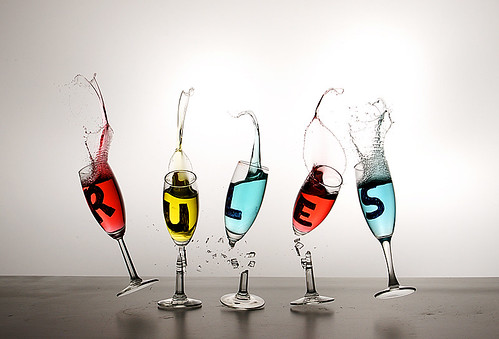
celebrate change
RULES are MEANT to be BROKEN

http://farm2.static.flickr.com/1364/531735508_3797e5ab8d.jpg

Wednesday, October 6, 2010

point : foundations

The main theme in Unit 2 - Foundations, is to reflect on what people have accomplished over time through the physical and intellectual accomplishments they left behind. We pass through history and see similarities between the first settlements. It is shown in their building designs, the way resources such as water were transported, and the recording of the society through carvings and mosaic story telling. Mesopotamia, China, Japan, and Ohio Valley were a few of the places that started using local materials and stacking to make walls, buildings, and burial places. Steps were also incorporated into the buildings to show power, they reach to the heavens and were built by slave labor. It is clear that the foundations of architecture were repeated and every culture tried to leave their successes for others to study.

As we move through time we come to Egypt. The hieroglyphs, pyramids, and temples that still remain explain everything we need to know about this society. Stacking and story telling continues, while nature influences the design of their columns and the Nile River provides more than enough water for a thriving society. They used the sun to align the structures to the north, south, east, and west and their belief about immortality guided them in their designs. Egypt is real; their structures are a testament of how intelligent and creative the Egyptians were. Their use of columns was a prototype for Greece, which can be seen in the Megaron. Center is important in Greece so columns were installed in the middle of this temple. Before long, they wanted to show off a little more and installed them on the outside of the building. Eventually a statue needed to be added in the center so those columns were moved to the sides. The Megaron incorporated three things that are included in every building in Greece, the porch, court, and hearth. Even on a bigger scale, the Acropolis included the porch, which was the main entrance area, the court was the area in the center, and the hearth was the Parthenon.

Just as Egypt was a prototype for Greece, Greece was a prototype for Rome. In Rome, we continue to see columns but the arch system of construction is introduced which allows for large grand spaces like public baths and market places. In these extravagant spaces, pleasures entertained the people so they did not pay attention to anything negative go on in the city. Pompeii is a great example of this. The temple, basilica, gymnasium, public bath, and theater at the front of the city, while the fights and executions were in the amphitheater towards the end of the city.

http://common.csnstores.com/common/marketing/leucos/stacking_a.jpg

I chose the image above to describe the unit because it includes many of the design elements found in the early structures we studied. There are triangular forms that represent the pyramids and the cylinder lamp resembles the columns in Egypt, Greece, and Rome. The rich colors remind me of the mosaics and frescos painted on the temple walls. Stacking is repeated in the circular shapes in the lamp, the wood planks on the floor, and the bricks on the wall. The background of wood and brick connect the importance of the strong materials used to build these amazing structures that we consider to be the foundations of architecture.

Wednesday, September 8, 2010

point: theories

The main theme in Unit 1-Theories, is to begin to understand architecture inside and out. It is all around us and is considered the Unavoidable Art. Since it comes from the mind, Louis Kahn said, “Architecture is what nature can’t make.” The most obvious reason architecture is unavoidable is because we can’t walk through it. We live in homes, work in offices, attend schools, and worship in places that have been designed for our use. Nicholas Pevsner said, “a bicycle shed is a building, Lincoln Cathedral is a piece of architecture.” The shed is storage for objects, while the cathedral is for people to use. Humans have a lot of interpretations of it and we can see history alive in architecture. It seems complicated since we can learn so much about humanity through it. Architecture shows us about our values, successes and failures, aspirations, physical and social needs, cross-cultural insights, attitudes towards nature, and techniques available at a certain time in history. It is important though to remember the way Vitruvius saw it, stay balanced and keep it simple. Architecture and design is symbolic because it forms a dialogue with the past and future and designers need to know the history and theory of it so we can be conscious of what will be left behind. Designers want their work to be enjoyed for a long time, so it needs to be built well. Sir Henry Wotton said, “Well building hath three conditions: commodity, firmness, and delight.” If the function of the building meets the needs of people, the structure is strong, and it remains a pleasing experience for people, it will be a success.

In this unit we discussed all aspects of design, not just architecture. We talked about material culture and how people process the meaning of objects and we heard the ideas from three theorists that explain it very well. Jules David Prown believes that description, deduction, and speculation are a three-step process we use to form an opinion of an object. A silver tea pot from the 1800s was used as the example. To the owners, it was a comforting object that served warm tea. To the slaves, it was a sign of oppression. Dick Hebdige wrote more about the meaning behind an object using double meaning, maps of meaning, and subculture. And finally, Roland Barthes theorized about the hidden rules, codes, and conventions of meanings through semiotics, ideologies, and signs.

We discussed the design cycle theory that says we start with creativity in early life, we are at the height of creativity in mid life, and then creativity declines at the end of life. Learning the cycle of design is important for various reasons. We can appreciate the youth and observe the way they create things and incorporate their open mindedness into our designs. Then value the current moment and jump into our designs with both feet, knowing that our level of excitement and creativity will not always be the same. And finally, accept we will not be young forever so we need to design for the next generation, to inspire them and tell our story.

http://affair-jupiterhotel.com/wp-content/uploads/2010/04/Design_History_Understanding_Theory_and_Method-2514.jpg

I chose the image above to describe the theories unit because we discussed the past, present, and future. The gray blocks represent the past and future and the colored blocks represent the present. We have to design and build with careful consideration of the past and future, however the present is the most important time for us as designers.